

Freedmen Citizenship Delay Heads to Federal Court
A year after the Muscogee Nation's own high court ordered it to grant citizenship to Freedmen descendants, the tribe has refused. Now, the plaintiffs are turning to federal court.

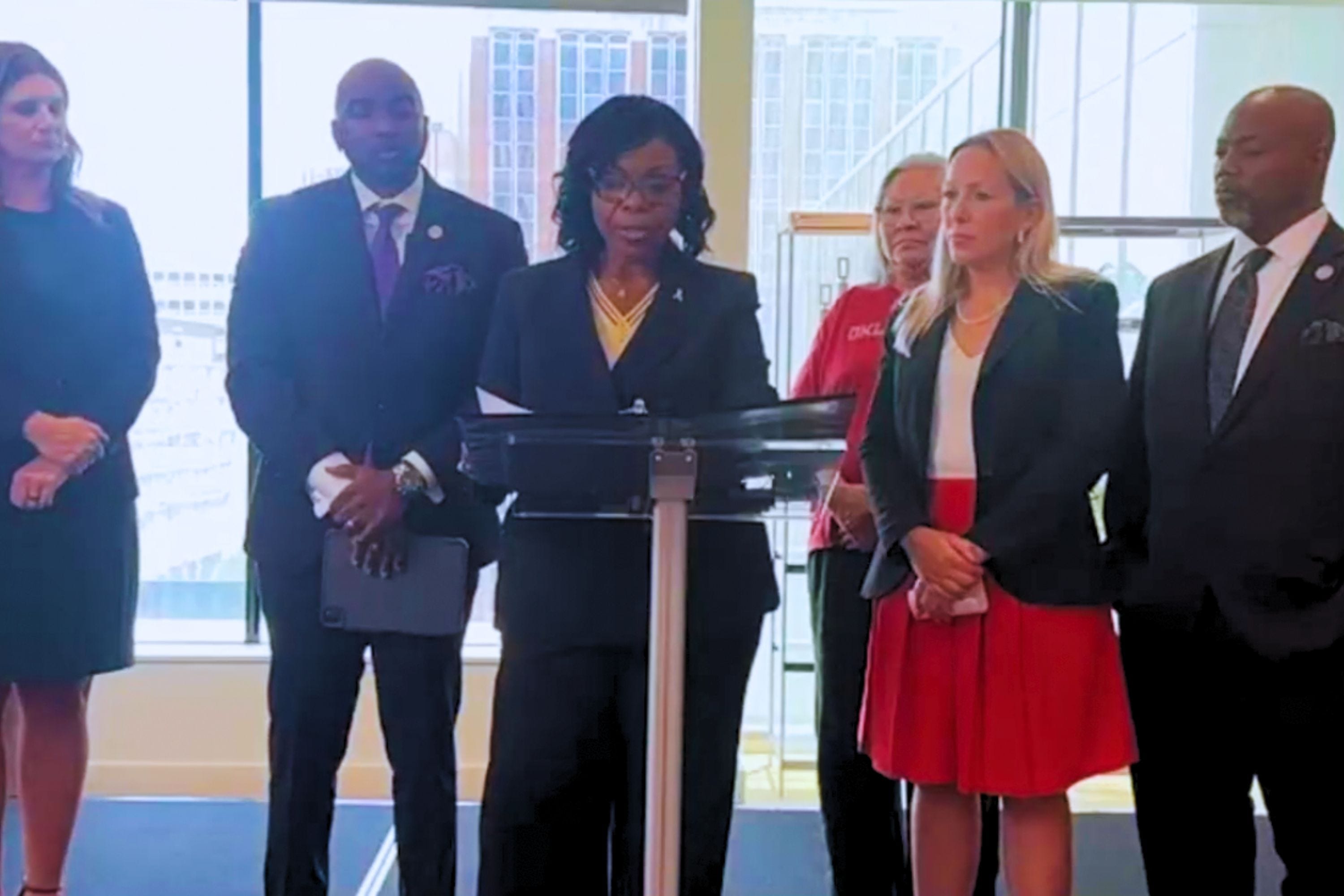
Two plaintiffs of Freedmen descent filed a federal lawsuit against the Muscogee (Creek) Nation last week asking the U.S. government to force the tribe to accept a ruling from its own tribal court in favor of tribal citizenship.
Plaintiffs Rhonda Grayson and Jeff Kennedy, alongside their attorneys, announced the federal lawsuit during a press conference1 in Oklahoma City on Thursday, July 23.
“It is deeply troubling that on this one-year anniversary of this historic ruling we are still fighting for compliance with the very decision that affirmed our citizenship,” Grayson said.
She serves as President of the Muscogee Creek Indian Freedmen Band and director of the Museum of Black Creek Freedmen History.
“We’ve already won. We’ve done all the things we needed to do. We just want to come home,” Kennedy added.
Creeks of African descent, both free and formerly enslaved, walked the Trail of Tears, served as political tribal leaders, and helped build the Nation post-removal, according to the Oklahoma Historical Society2.
The press conference marked exactly one year since the Muscogee Nation Supreme Court ruled that Creeks of Freedmen descendant were entitled to tribal citizenship. The tribe’s high court upheld a ruling from a lower tribal court in 2023 that ruled in favor3 of Freedmen.
Instead of honoring the ruling, Principal Chief David Hill ordered the MCN Citizenship Board to pause all Freedmen citizenship applications while the tribe updates its policies.
“Every day of noncompliance is another day that Black Creek Freedmen are denied our birthright and our very identity as citizens,” she said.
From Slavery to Citizenship
With no clear timeline from the tribe and no power to enforce the tribal supreme court’s ruling, attorneys for the plaintiffs are taking the legal battle to federal court.
“Chief Hill and the Board Members are engaged in an ongoing violation of federal law because they refuse to comply with the Treaty of 1866 by issuing citizenship to Plaintiffs,” the lawsuit states. It was filed in the U.S. District Court for the Western District of Oklahoma4.

The Muscogee (Creek) Nation is one of a handful of tribes that enslaved people of African descent and partially supported the Confederacy during the American Civil War. The Cherokee Nation, Chickasaw Nation, Choctaw Nation, and Seminole Nation also enslaved people of African descent to varying degrees.
After the war, the Treaty of 1866 between the tribe and the U.S. government promised an end to slavery and full citizenship for Freedmen descendants. It can be found on Oklahoma State University’s Tribal Treaties Database5.
The Treaty of 1866 promised Freedmen “shall have and enjoy all the rights and privileges of native citizens,” but a newly-signed tribal constitution in 1979 removed Freedmen as eligible citizens. For decades, Freedmen descendants have pushed for their rights.
Attorney Damario Solomon-Simmons is a national civil rights attorney who represents the Freedmen plaintiffs. He compared the tribe’s delay of the ruling to a Southern governor’s delay of integration in the 1960s.
“Chief Hill decided to stand in the doorway like Governor George Wallace, when he stood in the doorway at the University of Alabama being integrated, with the mantra of segregation today, segregation tomorrow and segregation forever,” attorney Solomon-Simmons said.
Office of Chief Hill Responds
In Depth With Deon reached out to the office of Muscogee Nation Principal Chief David Hill for comment. In a statement, press secretary Jason Salsman defended the delay of the MCN Supreme Court’s July 2025 ruling.
“We are committed to ensuring that the Muscogee Nation’s Constitution and laws are followed fairly and consistently. Getting policies right is always more important than getting them done quickly. Anything less would undermine the integrity of our governmental processes and the rights of our citizens,” press secretary Salsman stated.
Over the last year, Freedmen plaintiffs have filed several motions asking the Muscogee Nation Supreme Court to enforce its ruling. Without citizenship cards, Freedmen descendants have not been able to access resources or vote in the last two tribal elections. The issue, according to the office of Principal Chief Hill, should be addressed within the tribe’s own government.
It’s unclear why the tribe has delayed implementing a legally-binding tribal supreme court ruling by more than a year. The delay also isn’t the first time attorneys for the tribe have been accused of violating an order from their own tribal court.
In 2023, Muscogee (Creek) Nation District Judge Denette Mouser suggested attorneys for the tribe threatened her ahead of her ruling on the Freedmen citizenship case. It came after an attorney for the tribe handed the judge a letter that explained how to recall a judge.
“Thus, the Court’s only inference can be that the true motive of such action was at worst a veiled threat of removal from the bench, or at best an attempt to intimidate the Court prior to its ruling on Plaintiffs’ motion and/or prior to rendering final judgement,” Judge Mouser stated in her sanction order6.


In a statement to In Depth With Deon, press secretary Jason Salsman dismissed the federal lawsuit as improper.
“We would point out that federal law and precedent is clear that matters of Muscogee Nation law and governance are to be addressed through the Nation’s own governmental institutions,” press secretary Salmsan stated.
Tribal Sovereignty and the Treaty of 1866
Attorneys for the Freedmen plaintiffs say ignoring part of the Treaty of 1866 risks tribal sovereignty.
“What Chief Hill and others are doing actually puts the entire Treaty of 1866 and the Nation in jeopardy by refusing to adhere to a particular provision because they don’t like it,” attorney Solomon-Simmons said.
In 2020, the U.S. Supreme Court case McGirt v. Oklahoma reaffirmed the ongoing existence of the Muscogee (Creek) Nation in Eastern Oklahoma. The ruling opened the door for other reservations to regain recognition and strengthened their self-governing authority. The ruling was based on Article 3 of the Treaty of 1866. Separately, Article 2 outlined citizenship for Freedmen descendants.
Brenda Golden is an attorney and Muscogee (Creek) Nation citizen. She joined Thursday’s press conference in support of Freedmen citizenship.
“How would you feel if you woke up tomorrow and weren’t a citizen of the united states anymore,” Golden said.
Decades after signing the Treaty of 1866, the U.S. government broke up tribal lands and granted land allotments to individual tribal citizens through the Dawes Act in 1887. The law forced Native Americans to “assimilate into White American culture”, according to the National Archives7.
The U.S. divided tribal citizens into two rolls--“by-blood” and “Freedmen” rolls--and often placed anyone who appeared to be of African descent on the Freedmen roll, whether their parents were Indigenous or not.
In 1979, a group of Muscogee citizens drafted a Constitution that removed Freedmen descendants as eligible citizens. For nearly 50 years, they’ve been fighting to regain citizenship.
“We celebrated a treaty last week and yet still won’t recognize our brothers and sisters that walked on the trail of tears with us,” attorney Golden said. “We have so many citizens that want to argue that by blood is the only way that we should be counted as citizens, but I tell you we all bleed the same color red.”
Subscribe to support independent media.
SOURCES:
1VIDEO: Freedmen Plaintiffs Hold Press Conference on Federal Lawsuit
2Oklahoma Historical Society: Freedmen History
3Muscogee Nation judge rules in favor of citizenship for slave descendants
4Lawsuit: IN THE UNITED STATES DISTRICT COURT FOR THE WESTERN DISTRICT OF OKLAHOMA (see attached file above)
5Oklahoma State University Tribal Treaties Database: Treaty of 1866
6IN THE DISTRICT COURT OF THE MUSCOGEE (CREEK) NATION OKMUGEE DISTRICT (see attached file above)
7National Archives: Dawes Act of 1887
PREVIOUS COVERAGE
These Tribes Freed Black People After Juneteenth

Today, millions around the United States will begin to celebrate Juneteenth weekend, but millions more are just beginning to learn the full history of enslavement.